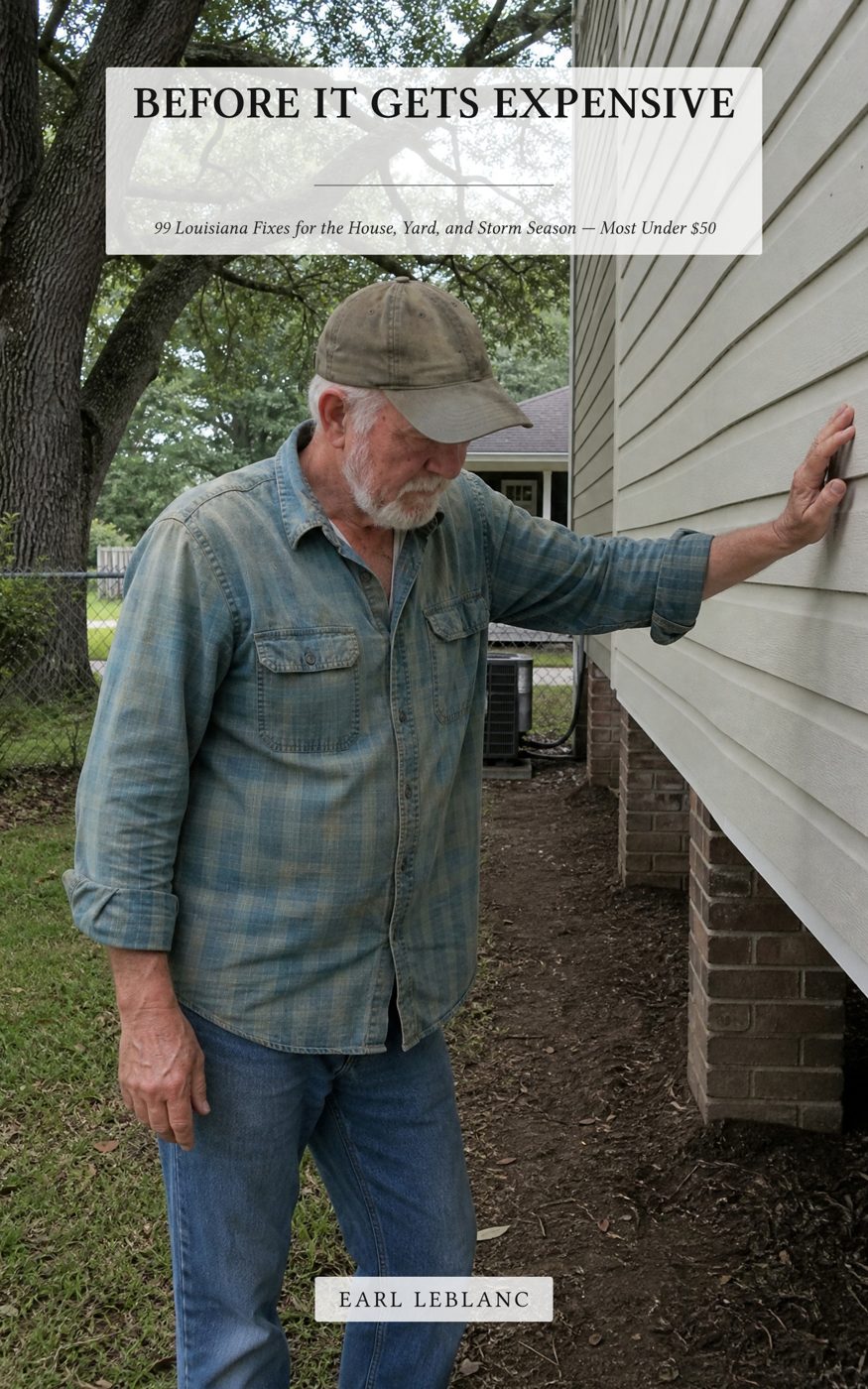
387 pages on noticing the small signs — the stain, the smell, the door that only sticks in July — while they are still small. Written out of Louisiana, where heat and water find a house's weak spots faster than anywhere else, and written to be used in any American home.
You do not have to master your house. You have to stay in conversation with it.
Earl LeBlanc · Before It Gets ExpensiveThree minutes on what this book is
Secure checkout · Instant access · No subscription
↓You get up before anybody else. The house is quiet and it isn't especially hot, and still something about it is off.
The bathroom mirror is already fogged and you haven't run any water. The towel you hung up last night is damp — not wet exactly, just unwilling to let go of yesterday. You open the hall closet for a clean shirt and the air that comes out has a smell to it. Not a bad smell. Not mildew. Just tired. Shut up, like the inside of a suitcase.
Nobody would call that house dirty. It was cleaned Saturday. Nobody would call it hot, either. The thermostat is fine and the air is moving.
What that house is, is wet. It has been wet for a while, and it has begun to mention it in the small ways available to it.
That's the whole subject of this book. Not emergencies — those announce themselves, and nobody needs a book to notice a ceiling coming down. The other business. The quiet signals a house sends for two or three years before it produces anything as obvious as a stain, by which time the repair has become a real one.
Here is the part that costs people money, and it isn't laziness.
Everybody has walked past the same stained fascia board for four years. It stopped being information the second month. After that it was just part of the house, the way the crack in the driveway is part of the driveway and the dip in the back corner of the yard is just where the yard dips.
You know the ones in your own place. Go stand in your hallway and think about it for a second.
The corner of the ceiling that darkens a little after a hard rain from one particular direction, and dries back out, and nobody has ever looked at what's above it.
The closet on the outside wall that has smelled a certain way since you moved in.
The window sill where the paint has gone soft, where water stood every winter that anybody can remember.
The low place in the yard that holds water for two days, that everybody in the family walks around without thinking about it.
The board on the porch that has a little give in it now, that didn't used to.
None of those are emergencies. Every one of them is a sentence, and the house has been saying it for years.
The arithmetic
There is a version of every one of those problems that is small, and a version that is not, and the only difference between them is how long it took somebody to look.
A soft spot on one board. A gutter that spills at one corner. A grade that runs the wrong way for six feet. One afternoon, a length of lumber, a wheelbarrow of dirt, and a Saturday that also had a ballgame on in the background. Or one phone call, on a Monday, to somebody who does this every week and is in and out in an hour.
The same water, four years further along. Now it isn't one board, it's the framing behind it. It isn't a corner of the yard, it's the sill plate. It isn't a phone call, it's an emergency, on a weekend, at whatever the emergency rate happens to be, and the man who comes out has to open up a wall before he can tell you anything.
Emergencies are the most expensive way to buy anything.
That isn't a scare tactic, and this book will not put a dollar figure on it, because the figure depends on your house, your climate, your ground, and how long the water has been at it. What can be said plainly is that the bill arrives as a running total rather than a single line item — wood replaced early, paint that fails early, a wall nobody could see so nobody noticed, weekends spent on cleanup a different arrangement would not have required.
The person who calls the right person on the right day, early, spends far less over a lifetime than the person who tries everything himself and calls only when it has become an emergency.
Attention is the cheapest thing you own. This book is about how to spend it.
The mechanism
A reasonable question: why would a homeowner in Ohio, or Arizona, or Oregon want a book written out of Louisiana?
Because Louisiana runs a house through the accelerated version of the same test yours is taking slowly.
Down here, heat and moisture are not conditions you live in. They are active ingredients in nearly every problem a house has. A wet ninety-five-degree afternoon, four months of it a year, plus rain that arrives all at once, plus ground that does not drain, plus a storm season with a name on it — that combination finds a house's weak spots in about eighteen months. What takes fifteen years to surface in a dry climate surfaces here in two, and it surfaces in the same order, in the same places, for the same reasons.
Freeze and thaw. Ice dams. Snow load. Wildfire. Drought. Expansive clay. Hard water. The pests native to your county. The storms that come, or don't.
Water takes the easiest path available, every single time, and it never gets tired and never picks a different one out of boredom. Wood that stays wet fails. Air that can't move carries its moisture into whatever is nearest and coldest. A room at the end of a hall with the door closed behaves the same way in Baton Rouge and Bismarck. A person who cannot get to a thing will not maintain it. And a mark that gets walked past stops being information in about six weeks, in every house in America.
Those are the habits this book teaches. The threats change by region. The noticing travels.
Most of what's in these pages is not specialized knowledge. It is ordinary knowledge — the kind that used to get handed across a fence line or over a kitchen table, from somebody who had already made the mistake to somebody who hadn't made it yet.
It got scarce. Not because anybody stopped needing it, but because fewer people now live next door to somebody who has owned a house for forty years and is willing to walk over and look at your gutter with you.
This book is that conversation, written down. Where a homeowner should handle a thing himself, it says so and tells him how. Where he should stop, back off, and call somebody who does it for a living, it says that too, plainly, and does not pretend otherwise to make the book feel more useful.
Secure checkout · Instant access · No subscription
The book
Louisiana Lessons for Any American Home · By Earl LeBlanc
387 pages · Six parts · Thirty-eight chapters
387 pages. Six parts, arranged the way trouble actually arrives: weather and humidity first, because that is the ground everything else stands on. Then water and drainage, which is where the expensive failures live. Then pests. Then the porch, yard, and garden. Then storms and power. Then the ordinary business of keeping a house going year after year.
A digital first edition, delivered the moment you buy it. Read it on a phone, a tablet, or a computer, or print the parts you want to carry outside.
A morning you recognize. What the house is actually telling you. What to do about it this week. And what to hand to somebody else.
That last part is not a footnote. It's a quarter of the book.
Six parts
Here is what each part is for, and a few of the things you'll find in it.
Heat and moisture, and why they explain half of what goes wrong in a house anywhere.
Why the thermostat says seventy-three while the den sits at eighty-one, and both readings are true. The four things comfort actually depends on, only one of which is air temperature.Chapter One · p. 15
What the house is telling you at nine o'clock at night, warm long after the sun let go of it. Evening tells you more about a house than noon does.Chapter One · p. 15
The hygrometer on the dresser that settles arguments. Why a single humidity reading is close to meaningless, what to look at instead, and how many days it takes to learn something real.Chapter Two · p. 25
Where a house sweats. The places moisture collects first, all of them places nobody looks: the caulk line at the tub, the grout in the shower corner, the window sill that ran with condensation last winter, the back corner of a closet on an exterior wall.Chapter Two · p. 25
When opening the windows makes the house worse.Chapter Two · p. 25
If you read only one part of this book, read this one.
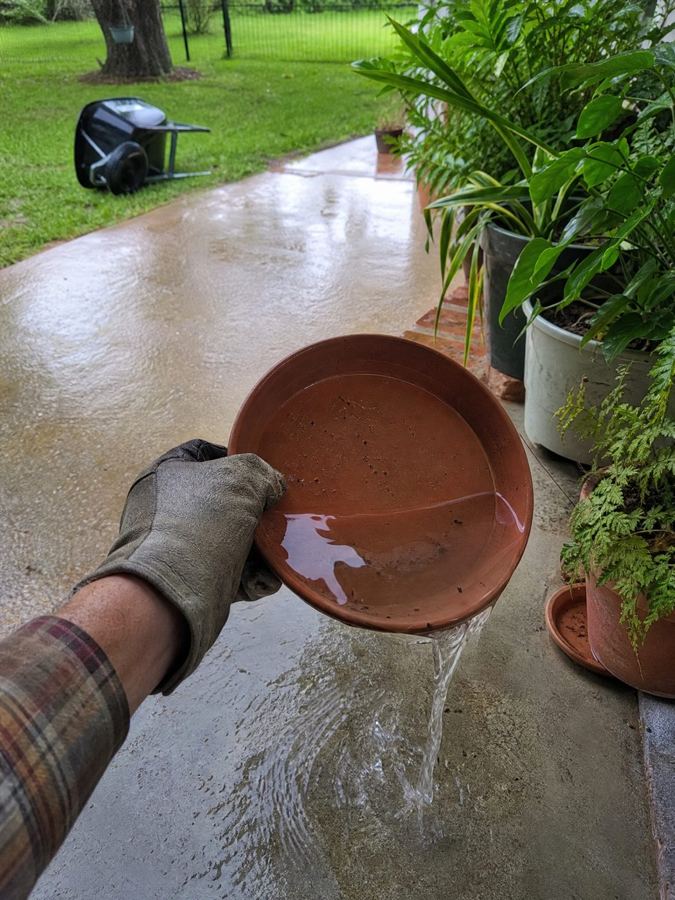
The five minutes after the rain stops. A few hundred gallons standing at the corner of your foundation, deciding what to do next, and the answer depending entirely on the shape of the ground and whether anybody has ever looked at it.Chapter Seven · p. 74
Walking your own yard during the rain instead of after it. The single most useful thing in the book, and it costs nothing but a jacket.Chapter Seven · p. 74
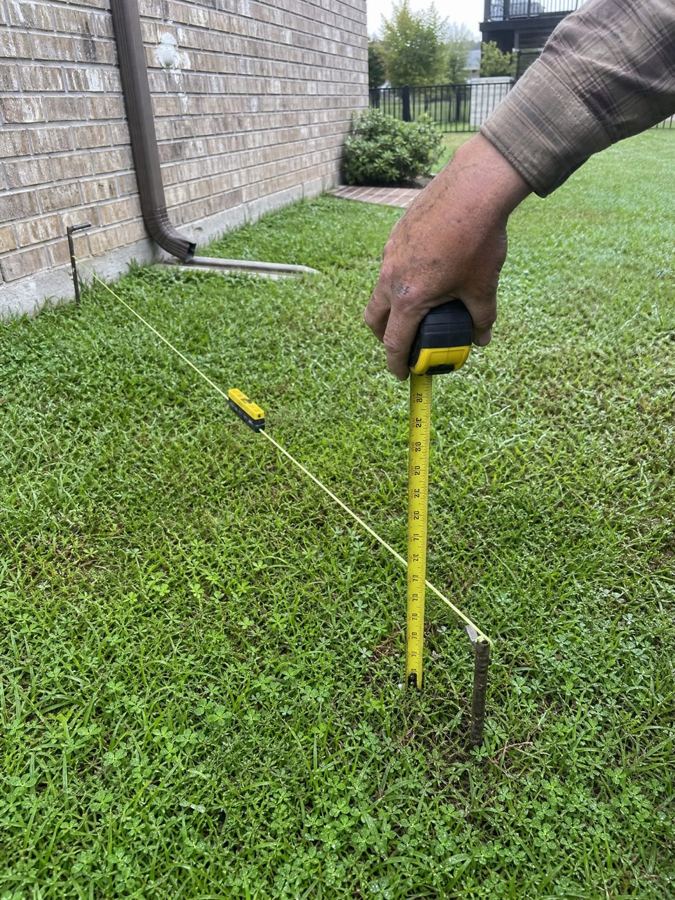
Roofs, gutters, downspouts, and grade, in the order water meets them — where each one hands off to the next, and what a failure at each stage looks like from the ground before it looks like anything indoors.Chapters Eight and Nine · p. 84
Pests handled as a question of doors, food, and moisture rather than warfare.
Walking the outside of your house the way something small and hungry would look at it. The gap at the corner of the garage, the door that doesn't quite meet the frame, the line where the siding stops.Chapter Twelve · p. 121
The two-inch gap beside the refrigerator, and why the thing you saw for half a second at eleven at night is a question about water and food rather than about spray.Chapter Thirteen · p. 130
A narrow ridge of packed dirt the width of a pencil, running up the exposed edge of the slab toward the siding. What it is, and what to do the same week you find it.Chapter Fourteen · p. 139
The scratching behind the pantry wall at ten o'clock, and how to tell what you are listening to before anybody opens anything up.Chapter Seventeen · p. 168
The outside of the place, where a great deal of trouble either starts or gets stopped before it reaches the house.
Standing in your own yard at two in the afternoon to find out where the sun actually lands, which is the decision every plant on the property depends on.Chapter Eighteen · p. 178
The vine that earns its keep. A muscadine that was a stick in a pot eleven years ago, that nobody waters and nobody sprays, cut back hard one afternoon a winter, feeding a household for three weeks every August. Where it goes, why shade ruins it, and why a plant in the wrong spot is a plant you feed rather than a plant that feeds you.Chapter Nineteen · p. 188
Why the calendar on the seed packet is written for somebody else, and why the fall window is the better of the two almost everywhere it exists.Chapter Twenty-Two · p. 218
The running total of a yard working against the house — wet wood, early paint failure, clutter against siding, and the quietest cost of all, which is a yard nobody uses.Chapter Twenty-Four · p. 239
Before, during, and after. Written where it matters most, useful anywhere the lights go out.
Which rooms fail first when the power is off, and why they are the exact same rooms from Chapter One.Chapter Twenty-Six · p. 258
Whether to open the house or keep it closed, which changes through the day and is a judgment rather than a rule.Chapter Twenty-Six · p. 261
The plain hard business of a refrigerator and a freezer full of food after three days without power.Chapter Twenty-Seven · p. 269
Heat as a health question rather than a comfort question, and the point at which a household stops treating it as an inconvenience.Chapter Twenty-Six · p. 261
The ordinary year, and the last skill in the book.
Why the maintenance list started in January is in a drawer by March, and why that is a design failure rather than a discipline failure. A generic calendar does not know that your gutters fill twice a year because of the pines, or that your one problem room faces west.Chapter Thirty-Three · p. 329
What replaces the list — small attention attached to things you are already doing.Chapter Thirty-Three · p. 330
The kitchen and the pantry, which run on the same two things as a roofline: access and attention.Chapters Thirty-Four and Thirty-Five · p. 339
Tools are not skill. Why owning a chainsaw does not make somebody a tree man, and why the tool is the only part of that a homeowner can buy.Chapter Thirty-Seven · p. 373
Knowing when to stop, which is the last skill in the book and possibly the most valuable one.Chapter Thirty-Seven · p. 378
That is a fraction of it. The book runs 387 pages.
Part I — Living With Louisiana Weather
Part II — Water Has a Mind of Its Own
Part III — The Things That Move In
Part IV — Porch, Yard, Garden, and the Ground Around the House
Part V — Storms, Power, and the Gulf Way of Preparing
Part VI — Keeping the House
Page numbers are the printed pages of the first edition.
Secure checkout · Instant access · No subscription
Read a piece of it
Everybody has tried the formal version at least once.
It usually starts in January. Somebody buys a planner, or prints a home maintenance calendar off the internet, or writes out twelve months of tasks on a legal pad at the kitchen table with real optimism. Change filters. Test alarms. Flush the water heater. Check the caulk. Inspect the roof. Clean the gutters. Service the equipment. Twelve months of virtue, all laid out.
January gets done. February gets mostly done. Somewhere in the middle of March, a kid gets sick, a car needs work, there's a week of rain, and the list goes in a drawer. By July nobody could tell you where it is, and there's a low-grade guilt attached to the whole subject for the rest of the year.
That's not a discipline problem and I'd rather nobody treat it as one. The failure is in the design.
From Part VI, Chapter Thirty-Three — "The Calendar Nobody Keeps"
That is the voice for 387 pages. No hype, no jargon, no lecture.
The boundaries
Now the boundaries, because they matter, and it is better to be plain about them than to sprinkle warnings through the pages like salt.
This book will not walk you through electrical work. Not panels, not wiring, not a receptacle that runs warm or a breaker that keeps tripping. Knowing what those signs mean is useful and the book tells you. Opening things up is not. The same goes for gas: any smell of gas, any suspicion of it, and the response is to leave and call from somewhere else, not to investigate.
It will not help you improvise with structural damage. A soft floor, a bowing wall, a sagging ceiling, anything that has shifted after a storm or a long wet spell — that is a situation for somebody who can put eyes on it in person and take responsibility for what they find. Serious flooding is the same. Water that has come up into a house is a health and safety problem rather than a cleaning problem. So is serious mold: not the spot of mildew on the bathroom caulk, which is ordinary, but the real thing, spreading behind a wall.
It will not tell you how to mix pesticides beyond what is printed on the label, or how to deal with a snake you can't identify, a wasp nest larger than your hand, or anything with teeth that has gotten into a crawlspace or an attic.
None of that is hedging. It is the actual craft. The skill of maintaining a place is not doing everything. It is knowing which things you do, which things you watch, and which things you hand off immediately without arguing with yourself about it.
If you are looking for a book that tells you that you can handle all of it yourself, this is the wrong one.
The founding reader edition
Before It Gets Expensive: Louisiana Lessons for Any American Home. The complete 387-page first edition, six parts, delivered within moments of purchase. Readable on a phone, tablet, or computer, and printable if you would rather carry pages outside than a screen.
The Gulf Coast Companion
Louisiana Garden, Yard, Humidity, and Storm-Season Know-How
A separate regional companion, included free during the founding-reader launch.
The main book was written to travel. The Companion is the part that doesn't. It is built specifically for hot-humid lower-South conditions — Louisiana, the Gulf Coast, east Texas, Mississippi, Alabama, the Florida Panhandle, and anywhere the summers behave the same way: the growing windows with a wall of heat in the middle of them, the humidity that never lets a thing dry, the yards that hold water, the storm season that arrives on schedule.
It is not a universal gardening guide, and it is not sold that way. If you live in the lower South, it is the more useful of the two books for about five months of the year. If you don't, take it as regional reading and use the main book.
Digital first edition · 387 pages · Six parts
Thirty-eight chapters on heat, water, pests, the yard, storms, and the ordinary year — written to be opened on the day something changes, and clear about what to hand to somebody else.
What you get for $37
Secure checkout · Instant access · No subscription
After Sunday the book is $47 and the Companion is no longer included.
That is what Part I and Part II are for. The specific threats change by region — you may have freeze and ice where we have humidity and storm season. The behavior doesn't. Water takes the easiest path in every state. Wood that stays wet fails everywhere. The habits of noticing are the same habits, and Louisiana simply teaches them faster.
A digital first edition, delivered as a download. Nothing ships and nothing arrives in the mail.
Yes to both. It opens on a phone, a tablet, or a computer, and it prints on ordinary paper if you would rather have a few pages in your hand while you're out at the gutter.
No. There is no jargon, no diagrams to decode, and nothing that assumes tools you don't own. Most of what the book asks of a person is to look at something and know what they are looking at. A good deal of the rest is knowing who to call and when.
A fair amount. Recognizing a moisture problem, a drainage problem, or a pest problem early — and describing it accurately to whoever is responsible for fixing it — is most of what a renter can do, and this book is largely about that skill.
Free advice is written for an average house that does not exist anywhere, and it arrives one isolated answer at a time, usually after you already know you have a problem. This is one continuous argument, in order, about seeing things early — and it is as clear about what to hand off as it is about what to handle.
The price goes to $47 and the Gulf Coast Companion is no longer included with the book.
Checkout takes a moment and the download arrives immediately afterward, along with a receipt you can reply to if anything goes wrong.
The founding-reader price is $37 until Sunday at 11:59 PM Eastern.
See what's inside
There is a man in the last part of this book standing at the bottom of a ladder, looking up at a soft fascia board with a limb over it, the ground soft under one leg of the ladder and a service line thirty feet away.
He has a good decision available to him. He can fold the ladder up, put the bucket back in the shed, and make a call Monday morning to somebody who does this every week and will be in and out in an hour.
That is not giving up. It is the correct answer, arrived at by somebody who was paying close enough attention to see what the job actually was.
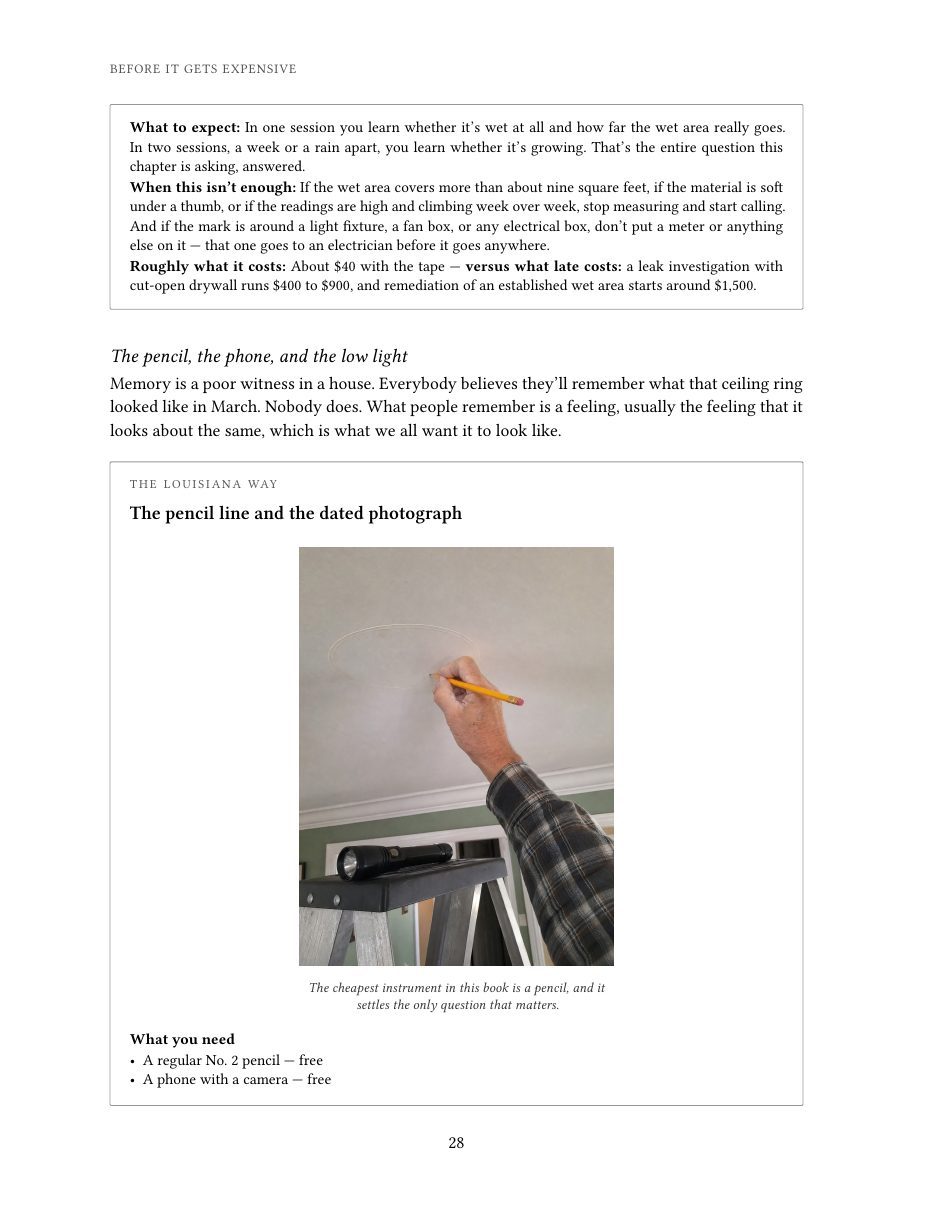
That is the whole book, in one man on one Saturday. Not heroics. Attention. The pencil line beside the stain. The five-minute lap after a rain. The look up at the trees. The tree service called in April instead of September.
You do not have to master your house. You have to stay in conversation with it.
Secure checkout · Instant access · No subscription
Founding reader price $37 until Sunday, 11:59 PM Eastern · $47 after